

What Is ADHD?
Facts & What Experts Want You to Know
Get clear, reliable information about ADHD, how it shows up in everyday life, and what experts say about ADHD coaching.

What Is ADHD?
ADHD is a neurodevelopmental condition that affects attention, focus, motivation, emotions, and executive functioning. It’s not a lack of intelligence or effort.
People with ADHD may feel overwhelmed, have big emotions, or find it hard to follow through. Many also have unique strengths and talents.



ADHD is not a lack of intelligence. It's a different way of processing information and experiencing the world.

The Impact of Unmanaged ADHD
ADHD is more than distraction. Without the right support, its effects can reach into everyday life.
-

Work & School
Difficulty planning, managing time, meeting deadlines, and completing tasks.
-

Relationships
Forgetfulness, impulsivity, emotional reactions and misunderstandings can create strain.
-

Confidence & Well-Being
Repeated struggles may lead to frustration, self-doubt, and feeling overwhelmed.
-

Daily Responsibilities
Organization, routines, finances, and following through can take extra effort without support.
-

Substance Use
People with ADHD have an increased risk of substance-use disorders. Early recognition and support are important.
-

Financial Strain
Impulsive spending, missed payments, disorganization, and difficulty planning ahead can lead to financial stress.
-

Criminal Justice Involvement
ADHD is more common in prison populations than in the general population. Untreated or unrecognized ADHD can be one factor among many, alongside other personal and social circumstances.
THE GOOD NEWS
With appropriate support, people with ADHD can develop strategies that improve daily functioning, build confidence, and help them work toward their goals.
What Experts Want You to
Know About ADHD Coaching
Leading ADHD clinicians and researchers highlight the value of coaching as a practical, strength-based approach. Here's what a few experts say.
-
Coaching can help build on strengths, develop skills, and support long-term success.
Dr. Edward Hallowell, M.D.
Psychiatrist, author and expert -
Coaching bridges the gap between understanding and real-life change.
Dr. Ari Tuckman, Psy.D.
Psychologist and author -
The right support doesn't change who you are, it helps you use who you are.
Dr. Hallowell
Psychiatrist, author and expert

More on the Science
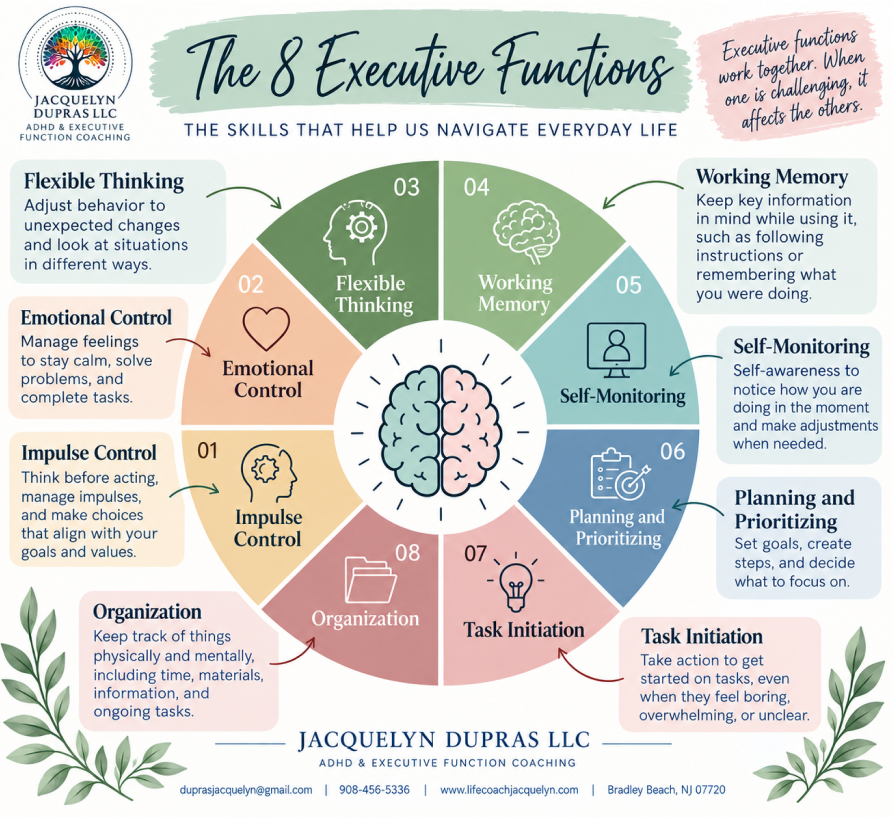
Dr. Russell Barkley, Ph.D. His research explains how ADHD affects executive functioning, including goal-setting, self-regulation, and follow-through.

Ready to Take the Next Step?
Learn how ADHD coaching can help you build the skills, confidence, and support you need to move forward.
You're not broken. You're just wired differently.
And there are real strategies that can help.